


All blogposts
Drinking water at work
Drinking water at work: is it mandatory?
Is drinking water at work mandatory? In Belgium, yes: employers must make drinking water (or another drink) available. In the Netherlands there's no literal rule for office staff, but employers do have a general duty of care for healthy working conditions. Below: the differences, and a smarter way to sort it than water jugs and bottles.
Drinking water at work in Belgium: what does the law say?
In Belgium it's in the Codex on well-being at work (article III.1-63). The employer makes drinking water or another drink available, matched to the type of work and its risks, and provides cups. So water is the minimum, and it shouldn't cost your employees a cent. If the heat load goes above certain limits, you also have to provide refreshing drinks at no cost to your team (Codex, book V). FPS Employment explains it here, in Dutch.
Drinking water at work in the Netherlands: what does the law say?
In the Netherlands, there's no rule saying you must offer office staff water. What does exist is a general duty of care: you have to provide safe and healthy working conditions (Working Conditions Act, article 3, in Dutch). Work in the heat falls under separate rules, so if in doubt, ask your occupational health service. Most offices offer water anyway. An employer who doesn't has some explaining to do.
(Not legal advice. But a good reason to double-check with your prevention adviser or occupational health service.)
Offering water at the office: how most companies do it
One of two ways: a water cooler with big jugs, or crates of bottles. Both work. Both also mean someone places the order, takes the delivery, hoists the full jug onto the cooler and carries the empty one away. That someone is often the office manager. Then there's the question of where it all gets stored, which is usually the corner next to the printer, if you're lucky.
The bigger problem is that nobody gets excited about it. A jug is functional, but it doesn't make anyone drink more. People don't walk to a water cooler for fun. How much water your team actually needs on a working day, you can read here.
Soft drinks at work: more waste, less hydration
Because water is boring, plenty of employers put soft drinks next to it. That means even more cans and bottles to get rid of, and a team that gets a sugar spike with a dip right behind it. That's not healthy hydration. What buying or renting a drinks machine really involves is in this article.
One machine for water and a healthy alternative to soft drinks
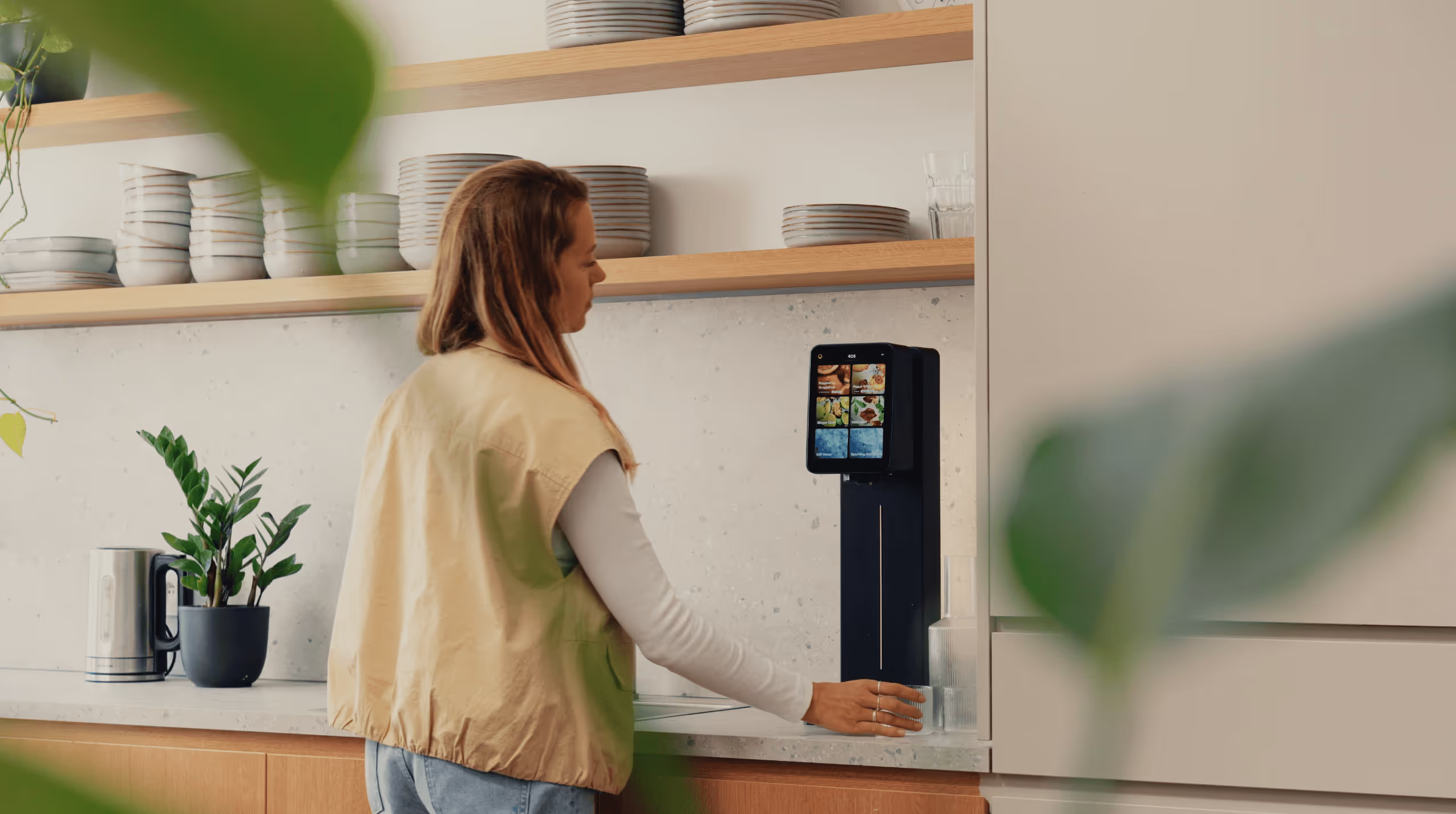
Want to offer water and make it something people look forward to? One machine can do both. A Dripl office water dispenser connects directly to the water supply and dispenses filtered water: still or sparkling, cold or at room temperature. Fancy something else? Choose from ten sugar-free flavours, some with vitamins or caffeine.
So one machine replaces the jugs or bottles and the cans of soda. You offer the water you're expected to offer, plus a real alternative to soft drinks: water as a soda replacement, with flavour, and a reason to walk over to it.
An office water dispenser that does more than give water
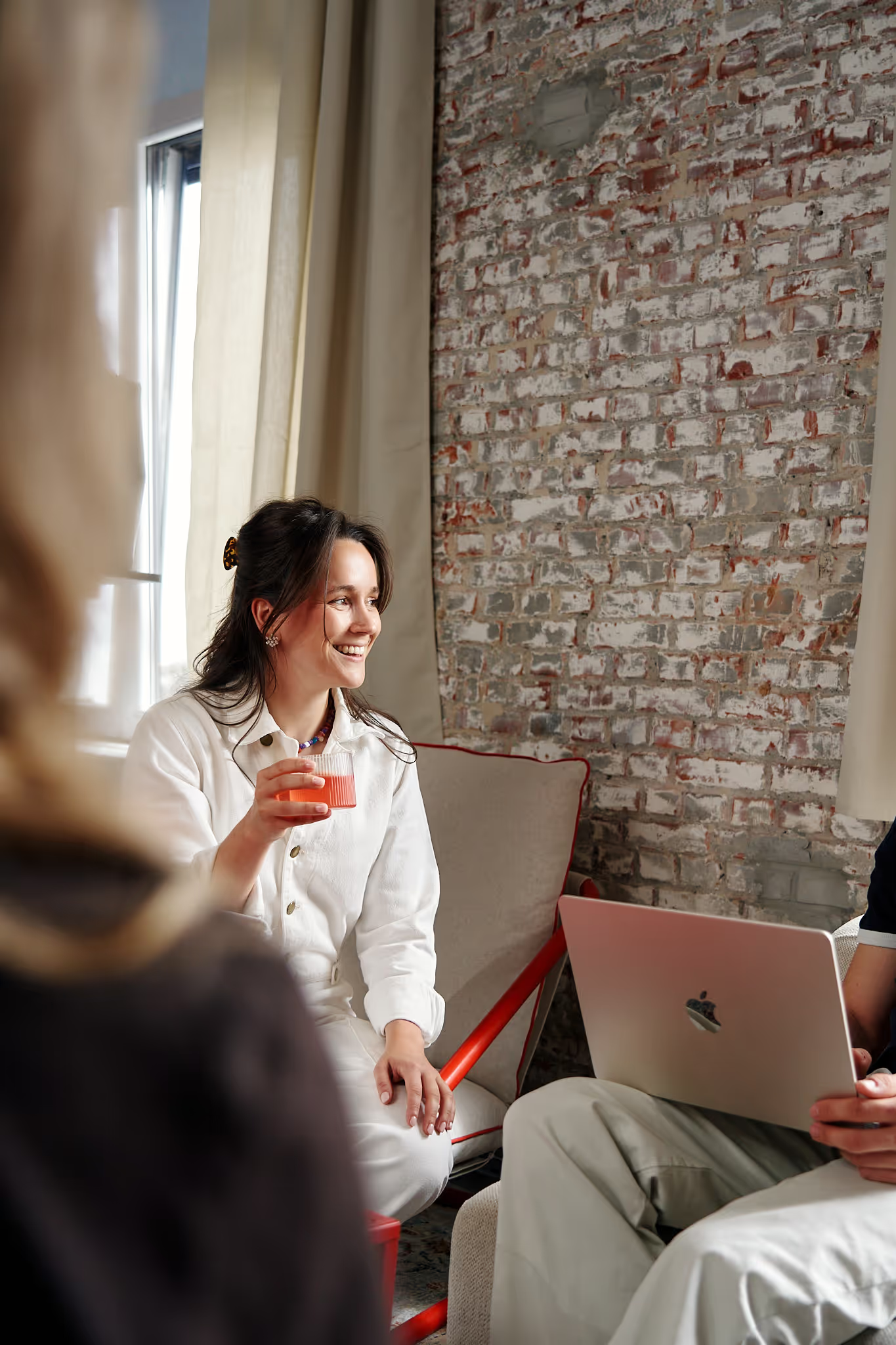
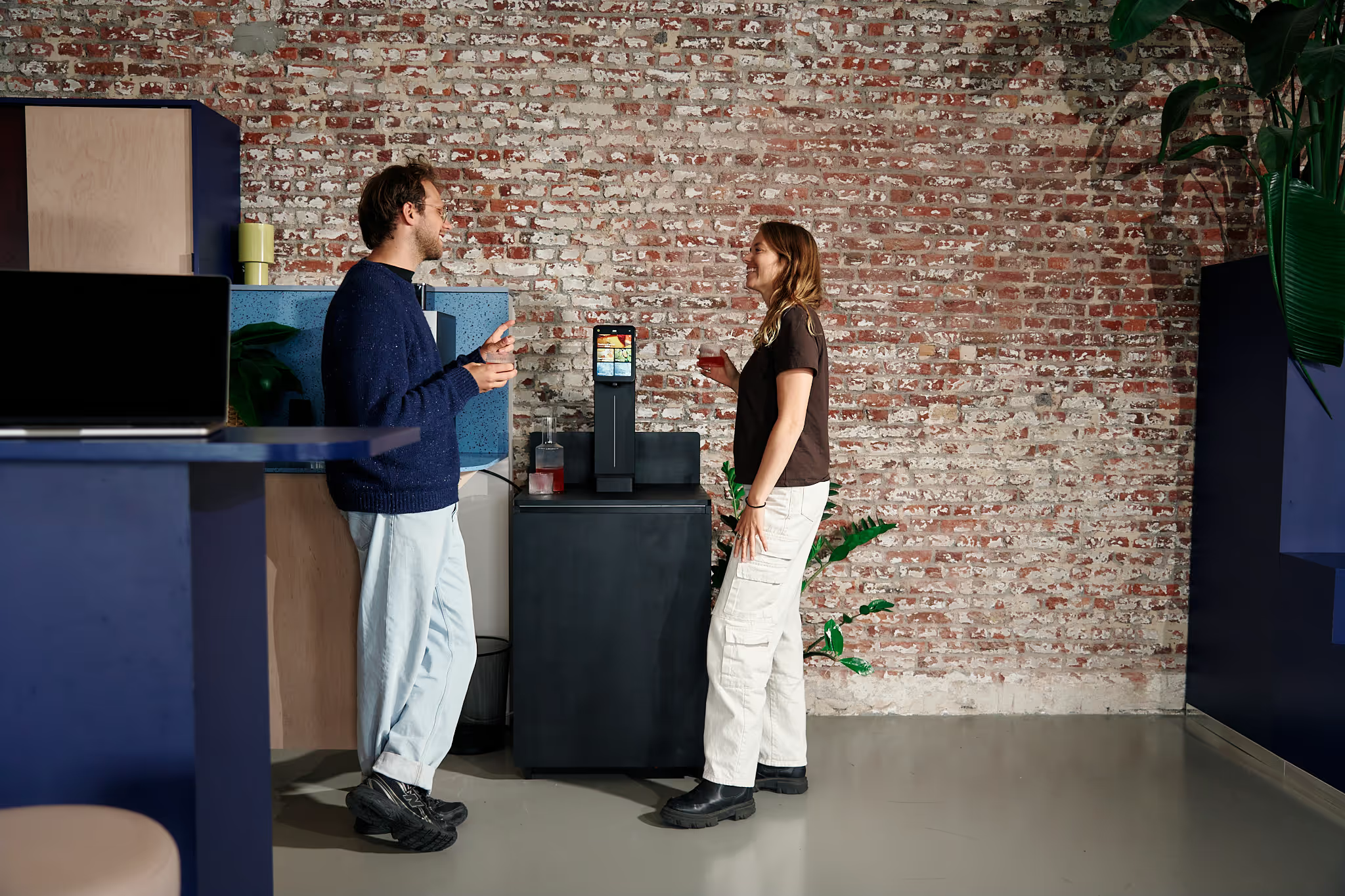
Call it a water dispenser, call it a drinks machine: if all you see is a machine, you're missing half of it. Wherever people pour a drink, they bump into colleagues. The morning chat by the coffee machine, and that second chat in the afternoon, when energy dips and someone fancies something cold. Those are the minutes where ideas travel, new hires feel at home and culture gets made.
In our series The Ripple it keeps coming back: culture doesn't hang on the wall, it happens in practice, in the places where people meet. And anyone coming in for a job interview can feel within ten minutes what an office is like. That counts for your employer branding.
A machine your team likes walking to touches three things at once: employee wellbeing, office experience and employer branding. Employees notice the difference between an employer who sorts out the minimum and one who means it. Water for the tick-box is the first. A place people like to gather is the second.
You pay a fixed monthly fee that includes installation, maintenance and service. Flavours and the CO2 for sparkling water are billed by consumption. Dripl is for locations with more than 10 daily users.
Curious what that means for your office? Request a tailored quote.
Frequently asked questions about drinking water at work
Do employers have to provide drinking water? In Belgium, yes. The Codex requires you to make drinking water (or another drink) available, matched to the type of work and its risks. Your employees shouldn't have to pay for it. In the Netherlands there's no literal rule for office staff, but the duty of care in the Working Conditions Act for healthy working conditions applies.
Is tap water enough? In Belgium it can be, as long as it's drinkable and cups are provided. If the water isn't drinkable, you have to make that clear.
Is a water dispenser mandatory? No. The law doesn't prescribe a machine. In Belgium the point is that drinking water is available, with cups. How you organise that is up to you.
What if it's very hot at work? In Belgium, when the heat load goes above certain limits, you have to provide refreshing drinks at no cost to your team. In the Netherlands, work in the heat falls under separate rules, so ask your occupational health service.
How is this different from a regular water cooler? No jugs or bottles: Dripl is connected to the water supply. And you get choice: still, sparkling, flavoured, with vitamins or caffeine.
How many employees do you need for a Dripl? Dripl is for locations with more than 10 daily users.


